
Understanding Surge Protection: How It Works & Why Your Electronics Need It
You don’t always see them coming, but power surges are more common than you think. While most people fear the massive lightning strike, the reality is that everyday grid hiccups and internal home wiring issues send invisible jolts to your outlets constantly.
The result? Damaged electronics, fried chargers, or a dead smart TV.
That’s where surge protectors come in. They aren't just extra outlets; they are the quiet heroes shielding your expensive gear from unexpected voltage spikes. But how do they actually work?
Power Strip vs. Surge Protector: What’s the Difference?
This is the most common mistake consumers make.
- A Power Strip is simply a splitter. It splits one wall outlet into multiple ports. It offers zero protection against electrical spikes.
- A Surge Protector looks like a power strip, but it contains internal safety components designed to sacrifice themselves to save your electronics.
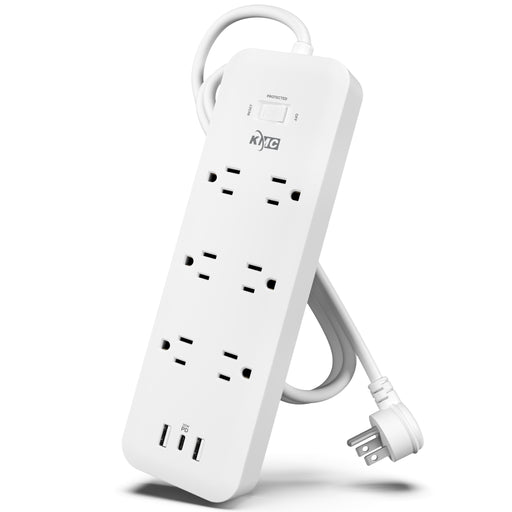
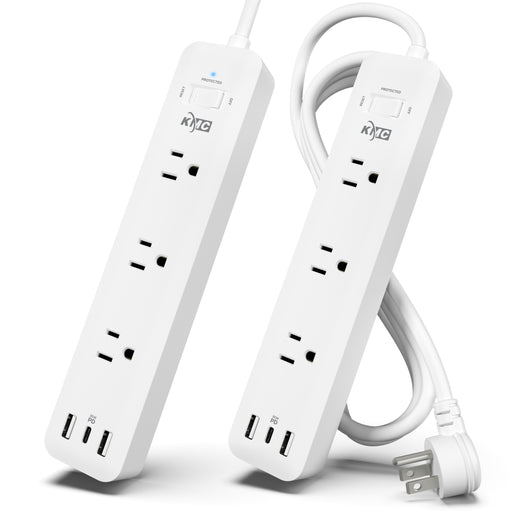
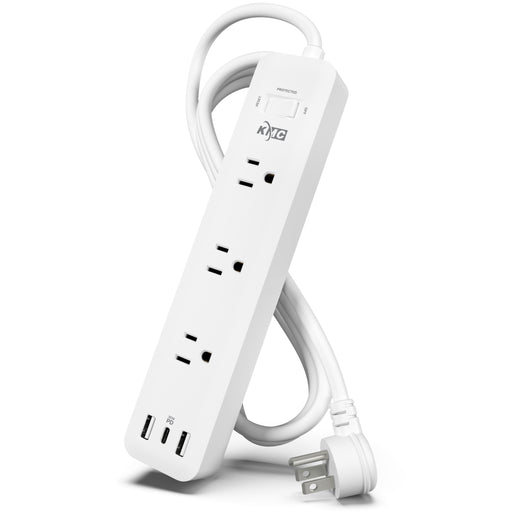
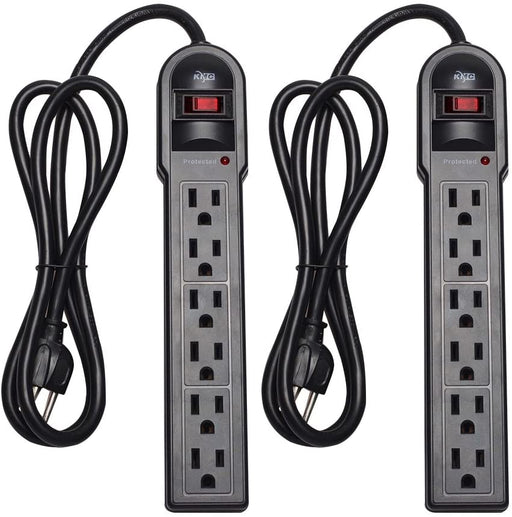
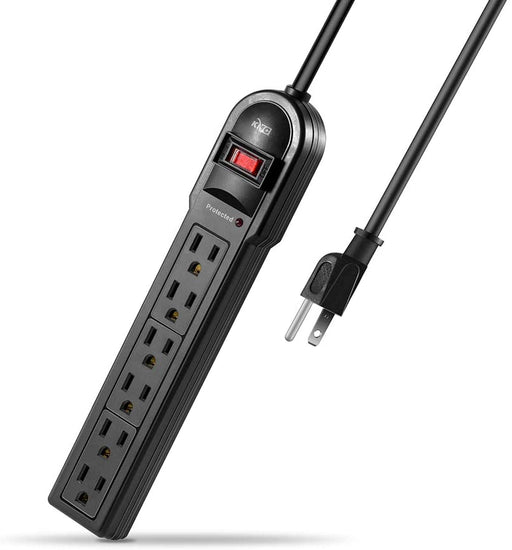
While we’re clearing things up: not all power strips offer surge protection. If it doesn’t mention joules, clamping voltage, or surge response time, it’s probably just a splitter providing extra outlets. Don’t leave your electronics unguarded—shop our collection of affordable, reliable KMC surge protectors.

Under the Hood: What is an MOV?
Most people think of a surge protector as a wall, but it acts more like a sponge—or a bodyguard.
Inside every KMC surge protector are tiny components called MOVs (Metal Oxide Varistors). Think of the MOV as a superhero standing between the wall outlet and your computer. When a safe voltage comes through, the MOV does nothing. But when a dangerous voltage spike hits, the MOV wakes up and absorbs that excess energy, diverting it away from your device and into the ground wire.
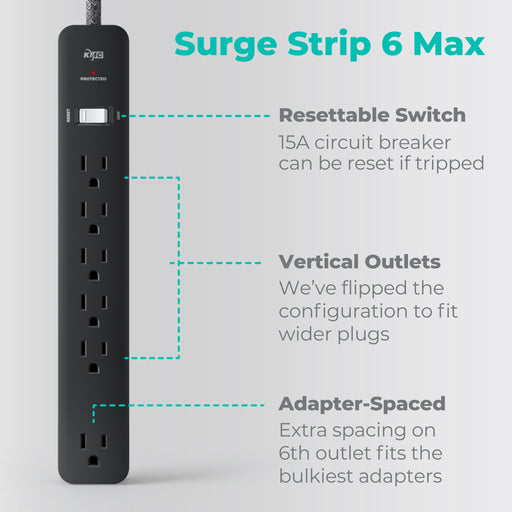
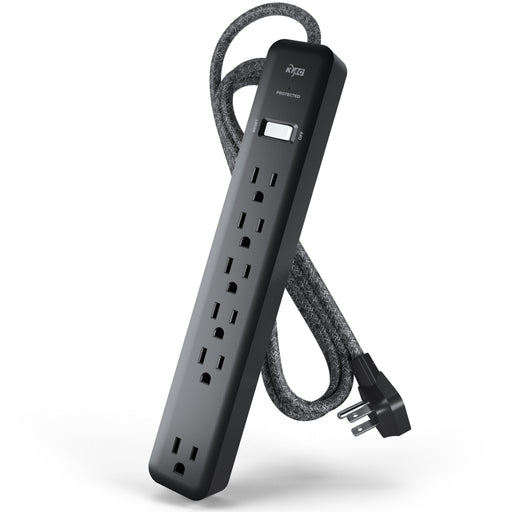
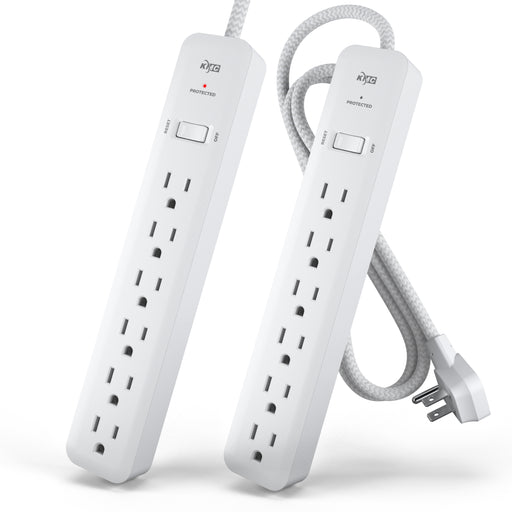
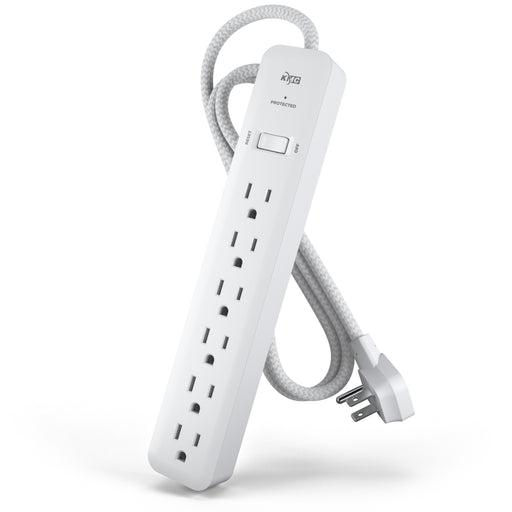
PRO TIP: Does your current power strip have a "Protected" light that's glowing on? If not, your electronics are at risk right now.
Why Surge Protectors Don't Last Forever
As the comic below illustrates, "Every hit takes a toll." See the "energy belt" on the superhero in the graphic? That represents the Joule Rating.
- The Joule Rating is the total amount of energy the surge protector can absorb over its lifetime.
- Every time the MOV fights off a small surge, it uses up a little bit of those Joules.
- When a massive surge hits (like from a storm), it might use up all the Joules at once to save your TV.
Once those Joules are depleted, the surge protector turns into a regular power strip. It will still provide power, but it will no longer provide protection. That's why we recommend replacing your surge protector every 3 to 5 years, or immediately after a major electrical event.
Buying Guide: How Many Joules Do You Need?
Not all protectors are created equal. When shopping for surge protectors, check the Joule rating based on what you are protecting:
- 700–1000 Joules: Good for small appliances, lamps, and phone chargers.
- 1000–2000 Joules: Ideal for office setups, laptops, and printers.
- 2000+ Joules: Mandatory for expensive setups like Home Theaters, Gaming PCs, and Smart TVs.
Also, look for UL or ETL certification, which indicates the device has been independently tested to meet the strictest industry safety standards.
Remember, when shopping for surge protectors, if a unit does not list the Joules or clamping voltage (the voltage at which the protection kicks in), it is NOT a surge protector so keep looking!
Frequently Asked Questions (FAQ)
-
How do I know if my surge protector is still working?
Many KMC models feature an "LED Protected" indicator light. If this light goes out, the MOVs have done their job and sacrificed themselves. It’s time to buy a new one. -
Can I plug a surge protector into another surge protector?
No. This is called "daisy-chaining," and it is a fire hazard that violates most electrical codes. Always plug your protector directly into a wall outlet. -
Do surge protectors work against lightning?
MOVs can handle grid spikes, but a direct lightning strike to your home helps deliver millions of volts that no plug-in device can fully stop. However, they are your best defense against the secondary surges that occur during storms.
Whether you’re outfitting a home office, dorm room, or an entertainment center, don't leave your gear unguarded. Shop KMC’s collection of UL/ETL-certified surge protectors today. It’s a small upgrade that makes a massive difference for the longevity of your electronics—letting our MOV heroes take the hit so your devices don’t have to.